
Polyaspartic vs. Epoxy Floor Coating: Which One Is Better?
Choosing the right floor coating can feel overwhelming — especially when comparing epoxy vs polyaspartic floor coating. Both are popular for garages, basements, and commercial spaces. However, they differ in performance, application, and long-term value. This guide breaks down everything you need to know to make the right call.
What Is Epoxy Floor Coating?
Epoxy is a two-part system — a resin and a hardener — that chemically bonds to concrete surfaces. Epoxy garage floor coating has been a popular choice for decades. It provides a hard, durable surface that resists chemicals and heavy foot traffic. Widely available, well understood, and usually cheaper upfront, homeowners and contractors often choose it first.
What Is Polyaspartic Floor Coating?
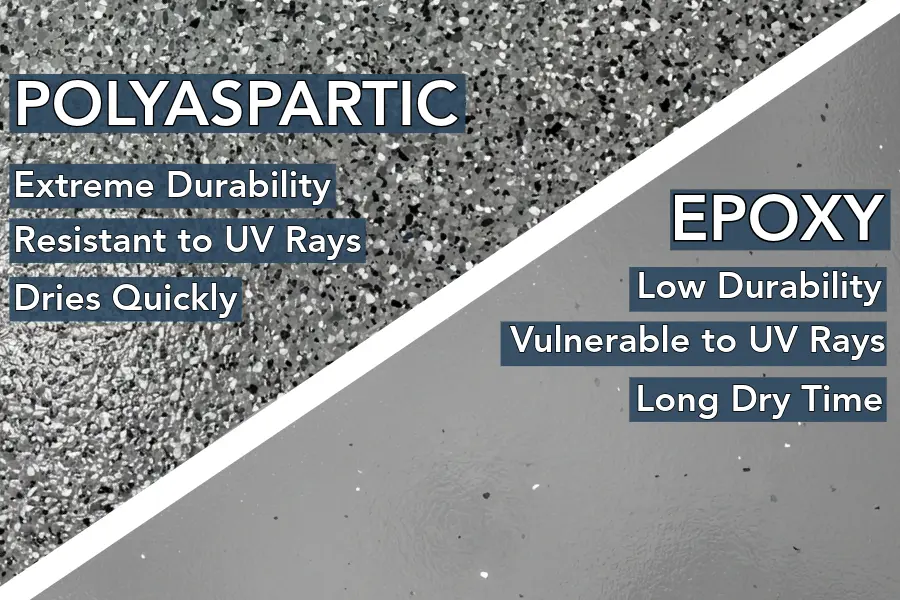
Polyaspartic flooring is a newer, more advanced coating in the aliphatic polyurea family. It was developed as a high-performance option over traditional coatings.
It is now often used for polyaspartic garage floor coatings. It cures faster, lasts longer, and handles UV exposure far better than epoxy. Though it costs more upfront, many professionals consider it better than epoxy for most demanding environments.
Key Differences
Understanding the difference between epoxy and polyaspartic comes down to several performance categories:
Durability and Lifespan
Epoxy typically lasts 5–10 years with proper maintenance. Polyaspartic coatings are rated for 10–20+ years due to their superior chemical resistance and flexibility. In high-traffic areas or climates with temperature swings, polyaspartic holds up significantly better.
Cure Time
Epoxy needs 24–72 hours to fully cure — sometimes longer in cooler conditions. Polyaspartic cures in as little as 2–6 hours, meaning floors can return to service the same day. This makes it a major advantage in commercial settings or tight renovation timelines.
UV Resistance
Epoxy yellows and degrades when exposed to UV light, which is a notable weakness in sunlit garages or outdoor-adjacent areas. Polyaspartic is UV-stable, maintaining its color and clarity over years of sun exposure.
Flexibility
Epoxy is rigid and can crack or chip under impact stress or substrate movement. Polyaspartic is inherently more flexible, allowing it to expand and contract with the concrete without delaminating.
Appearance
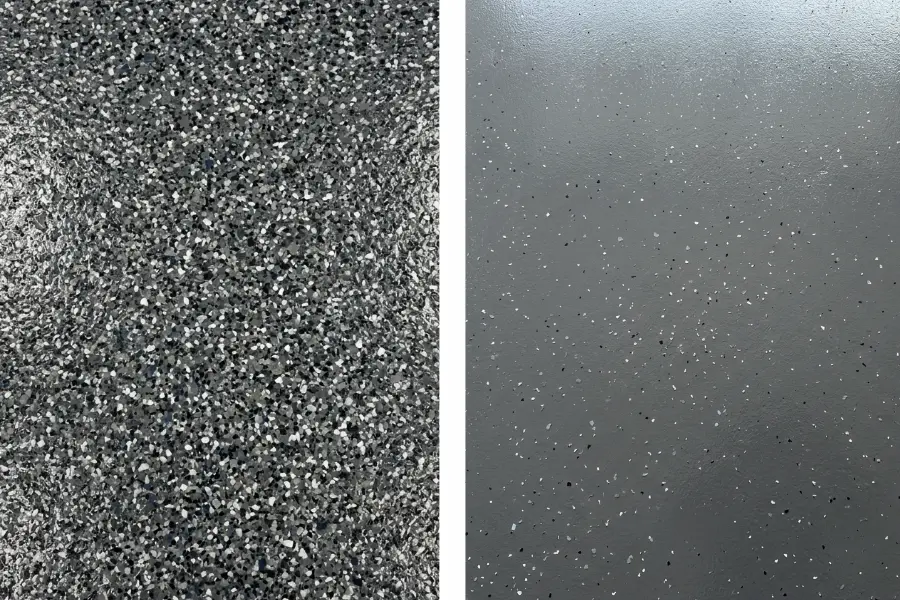
Both coatings are available in a wide range of colors and finishes, including flake and metallic systems. Polyaspartic tends to offer a higher-gloss, more consistent finish and accepts decorative flakes more uniformly due to its longer open time flexibility.
Maintenance
Epoxy requires regular cleaning to prevent staining and surface degradation. Polyaspartic floors are easier to maintain. Their smooth, dense surface resists dirt, oil, and chemicals. This helps reduce cleaning effort over time.
Cost
Epoxy costs approximately $3–$7 per square foot installed. Polyaspartic coating runs $5–$12 per square foot. While the upfront cost is higher, polyaspartic often gives better value over 10 to 15 years. It needs less maintenance and lasts longer.
Quick Comparison
| Feature | Epoxy | Polyaspartic |
|---|---|---|
| Cure Time | 24–72 hours | 2–6 hours |
| UV Resistance | Yellows over time | Excellent – stays clear |
| Durability | 5–10 years | 10–20+ years |
| Flexibility | Brittle under impact | Flexible, impact-resistant |
| Temperature Range | 50°F–90°F | -30°F–140°F |
| Cost (per sq ft) | $3–$7 | $5–$12 |
| Finish Options | Moderate variety | Wide variety |
| Maintenance | Moderate | Low |
Installation Process
Surface Prep
Both coatings require thorough surface preparation — concrete must be clean, dry, and free of existing coatings, oils, or moisture. Recommend diamond grinding or shot blasting for both systems to ensure proper adhesion.
Application Differences
Epoxy is typically applied in two coats — primer and topcoat — and requires careful mixing ratios. Polyaspartic can sometimes be applied in one coat. It needs fast, skilled application because it has a short working time. Professional installation is strongly recommended for polyaspartic systems.
Temperature Considerations
Epoxy is sensitive to temperature — it should not be applied below 50°F or above 90°F. Polyaspartic can be applied in temperatures ranging from -30°F to 140°F, making it suitable for winter installations or regions with extreme climates.
Cost vs. Long-Term Value
When evaluating cost, it's important to look beyond the initial price per square foot. Epoxy may seem budget-friendly, but it may need recoating every 5–7 years.
Add maintenance supplies and downtime, and the comparison shifts. Polyaspartic flooring often pays for itself through longevity and reduced upkeep. For commercial floors, warehouses, or garages that see daily vehicle traffic, the long-term savings are significant.
When Each Coating Makes Sense
Where Epoxy Is Sufficient
Epoxy works well in low-traffic indoor spaces with no UV light, such as basements, workshops, or storage rooms. It also works well for budget-conscious projects where the floor needs periodic recoating anyway. If the space is climate-controlled and gets light use, epoxy garage floor coating is a reliable, low-cost option.
Where Polyaspartic Performs Better
Polyaspartic vs. Epoxy Floor Coating
Polyaspartic is a stronger choice for sunlit garages and commercial facilities. It also works well in showrooms.
Use it on surfaces exposed to temperature changes, chemicals, or heavy loads. When speed matters — for rental properties, retail spaces, or occupied buildings — its fast cure time is a practical advantage.
For homeowners who want a once-and-done solution with minimal maintenance, polyaspartic flooring delivers on that promise. The investment is higher, but so is the return.
Ready to upgrade your garage floor? Danley's offers free quotes for polyaspartic garage floor coating throughout Chicagoland. Get in touch today to find the right solution for your space.
Get started with a FREE QUOTE
Complete the form below and a Danley’s representative will be in touch.
*View our privacy policy
Illinois Roofing License Number: 104-017677 | City of Chicago General Contractor License Number: TGC093963