
Can You Put Polyaspartic Over Epoxy?
If you already have an epoxy floor coating in your garage and it’s started to wear out, you may want an upgrade. For a tougher, better-looking finish, you may wonder if a polyaspartic top coat is an option.
The short answer is yes, in most cases you can apply polyaspartic over epoxy. This combination is common, and many professional floor installers use it. But there are a few things you need to know before you go that route.
Is Polyaspartic Compatible With Epoxy?
Yes, polyaspartic works well over epoxy as a topcoat. This is true if the surface is in good shape and well prepared. Polyaspartic coatings are a type of aliphatic polyurea that bond well to cured epoxy, making an epoxy base with polyaspartic top coat one of the most popular two-coat systems used on residential garage floors today.
The key word is cured. The epoxy layer beneath needs to be fully hardened before anything goes on top of it. If it hasn't cured completely, the topcoat can delaminate, bubble, or fail to adhere properly.
Why Apply Polyaspartic Over Epoxy?
There are real performance benefits to applying polyaspartic on top of epoxy:
- Durability: epoxy is tough, but polyaspartic is tougher. It resists scratches, abrasion, and hot tire pickup. Hot tire pickup happens when warm tires pull coating off the floor. Adding a polyaspartic top coat over epoxy gives the floor a harder, more resilient wearing surface.
- UV resistance: plain epoxy yellows over time when exposed to sunlight. Polyaspartic coatings are UV-stable, which means the floor holds its color and clarity much longer. For garages with windows or open doors, this matters more than most homeowners realize.
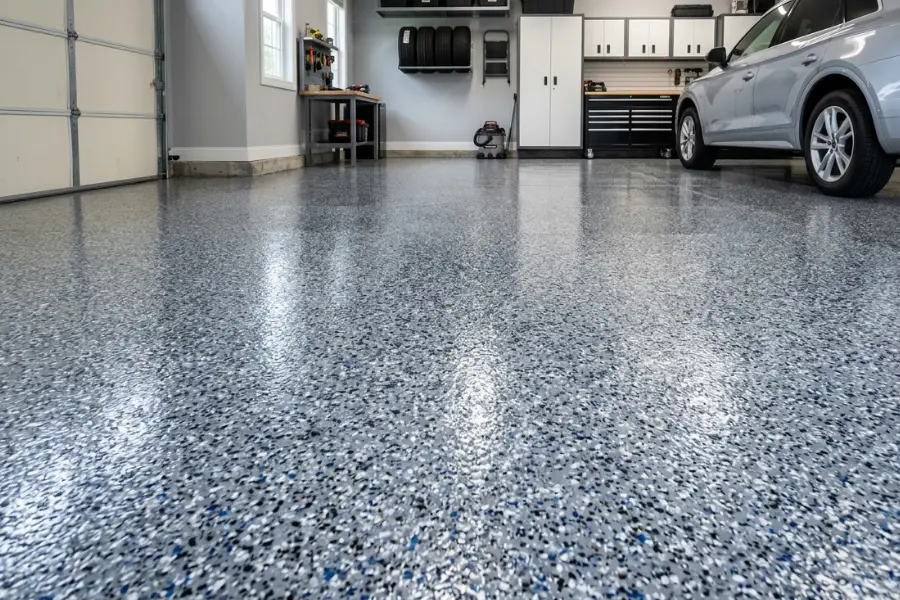
- Better finish: polyaspartic cures to a high-gloss, smooth finish that looks cleaner and is easier to sweep and mop. It also adds a layer of protection for any decorative flakes or color that were applied during the epoxy stage.
When Should You Not Do It?
When not to apply polyaspartic over epoxy:
- Damaged or peeling epoxy. If the epoxy is already flaking, chipping, or peeling from the concrete, a topcoat will not fix it. It will fail along with the base coat. You'd need to strip the existing coating first and start fresh.
- Moisture issues. If moisture is migrating up through the concrete slab, no topcoat will save you. Both the epoxy and polyaspartic layers will eventually lift. Any moisture problems in the concrete need to be identified and addressed before any coating goes down.
- Poor surface prep. A polyaspartic topcoat applied to a glossy, unscuffed epoxy surface may not get the mechanical bond it needs. If the epoxy wasn't sanded or abraded before application, adhesion can fail even on an otherwise intact floor.
How to Apply Polyaspartic Over Epoxy
Done right, this is a straightforward process — but shortcuts here lead to callbacks.
- Start by thoroughly cleaning the epoxy floor to remove any grease, oil, or contaminants.Then use a floor buffer or hand sander to scuff the entire surface. This gives the polyaspartic something to grip. Vacuum up all the dust and wipe the surface with a tack cloth.
- Apply the topcoat: mix the polyaspartic as the manufacturer instructs. This is a two-part product with a short pot life, so work quickly. Apply it evenly using a squeegee or roller, working in manageable sections. Back-roll to eliminate lines and bubbles.
- Let it cure. Polyaspartic cures fast — often foot-traffic ready in a few hours and vehicle-ready within 24 hours. Resist the urge to rush back onto it. Full cure time varies by product and temperature, so follow the spec sheet.
Common Mistakes to Avoid
Skipping prep
No amount of product quality will compensate for a dirty or unscuffed surface. This is where most failures start.
Applying too soon
If the epoxy base coat doesn’t fully cure, the topcoat may trap solvents or react unpredictably. Check the epoxy manufacturer's recoat window before proceeding.
Wrong conditions
Polyaspartic is sensitive to temperature and humidity. Applying it in extreme cold, direct sun, or high humidity can affect how it flows, levels, and bonds. Ideal conditions are typically between 50°F and 90°F with moderate humidity.
Final Verdict
Can polyaspartic be applied over epoxy? Yes, you can! And when the floor is in good shape and you do the prep work correctly, you can make it one of the best upgrades for a garage floor.
The combination of an epoxy base and a polyaspartic topcoat gives you epoxy’s build and adhesion. It also adds polyaspartic UV resistance, hardness, and gloss. However, you shouldn’t attempt it if compromised epoxy covers the slab or if moisture exists in the slab.
If you're in the Chicagoland area and want this job done right the first time, get a free quote from Danley's — a trusted local contractor specializing in polyaspartic floor coatings for residential garages across Chicagoland.
Get started with a FREE QUOTE
Complete the form below and a Danley’s representative will be in touch.
*View our privacy policy
Illinois Roofing License Number: 104-017677 | City of Chicago General Contractor License Number: TGC093963