
Polyaspartic Floor Coating: What It Is, Pros and Cons
If you’ve been researching floor coating options, you’ve probably come across the term polyaspartic floor coating. It’s been gaining traction as a premium alternative to traditional epoxy, especially for garages, basements, and commercial spaces. But what exactly is it, and is it the right choice for your project?
This guide explains what you need to know, from how it works to the real pros and cons of polyaspartic.
What Is Polyaspartic Floor Coating?
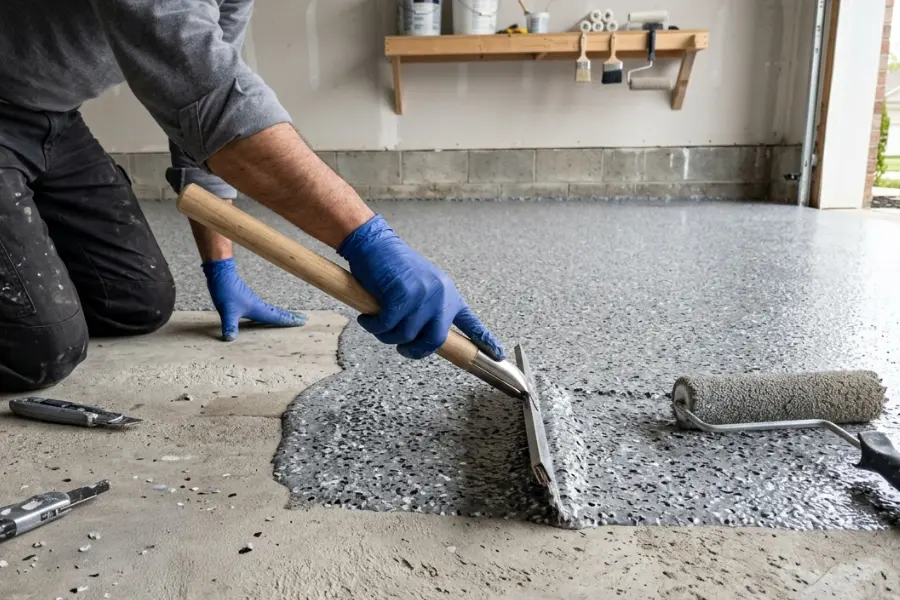
Polyaspartic coating is a type of aliphatic polyurea—a category of synthetic polymer that forms an exceptionally tough, flexible film when applied to concrete or other surfaces. In simple terms, polyaspartic means a coating made from a chemical reaction.
This reaction happens between an aliphatic isocyanate and a polyaspartic ester. The result is a product that combines industrial coating strength with features that are easier to apply. It is also easier to live with than older options.
To understand polyurea technology: traditional epoxy coatings use two parts and cure through a chemical reaction. However, they are sensitive to temperature and humidity.
They can also take days to fully cure. Polyurea chemistry speeds that reaction up dramatically and makes it more stable across different conditions. Polyaspartic flooring is a refined version of polyurea that has been engineered specifically for floor coatings, offering improved workability and UV stability compared to standard polyurea products.
This technology has been used in industry for decades. Now widely available for residential homes and light commercial uses too.
Pros of Polyaspartic Floor Coating
Several compelling benefits of polyaspartic floor coating set it apart from epoxy and other competitors. Here’s a closer look at the advantages.
Fast Curing and Installation
One of the biggest selling points of polyaspartic flooring is its curing speed. Depending on the mix and temperature, polyaspartic coatings can cure in one to four hours. Standard epoxy usually takes 24 to 72 hours to cure.
In many cases, a full installation (surface prep, base coat, and topcoat) can be completed in a single day. That means minimal disruption, especially for garage floors or commercial spaces where downtime matters.
High Durability and Longevity
Polyaspartic coatings are extremely tough. They resist abrasion, impact, and heavy foot or vehicle traffic exceptionally well.
When installed the right way, a polyaspartic floor can last 15 to 20 years or more. This is much longer than a standard epoxy coating. Epoxy usually needs recoating every 5 to 10 years. The flexibility built into the chemistry also helps it resist cracking from minor concrete movement, a common failure point for more rigid coatings.
Chemical, Stain, and UV Resistance
Among the key advantages of polyaspartic coating is its resistance to chemicals, oil, and common household stains. It can handle gasoline, brake fluid, fertilizers, and cleaning products without degrading or discoloring. More importantly, the aliphatic chemistry makes it highly UV stable—it won’t yellow or chalk over time when exposed to sunlight. This is a major drawback of standard epoxy, which tends to amber or fade within a few years in sunlit areas.
Works in a Wide Range of Temperatures
Polyaspartic coatings can be applied and will cure properly in temperatures ranging from well below freezing to well above 100°F. This gives installers flexibility that epoxy doesn’t offer. Epoxy becomes nearly unusable in cold conditions and can fail to cure properly in extreme heat.
For homeowners who want to coat their garage in early spring or late fall, polyaspartic is often the best option. This is because temperatures can change a lot during these seasons.
Low Odor and Easy Maintenance
Compared to solvent-based epoxy systems, polyaspartic coatings usually have much less odor during application. This makes installation more tolerable in occupied homes.
Once cured, the surface is seamless and non-porous. This makes cleaning simple. A damp mop or mild cleaner is usually enough. It helps keep the surface looking sharp.
Cons of Polyaspartic Floor Coating
No coating is perfect. Understanding the cons is just as important as knowing the benefits when weighing the pros and cons of polyaspartic coatings.
Higher Cost
Polyaspartic floor coating costs more than epoxy—both in materials and labor. The raw chemical components are more expensive to produce, and the specialized knowledge required for proper installation adds to the price. For budget-conscious projects, this can be a significant factor. However, when you factor in longevity and the reduced likelihood of needing to recoat in 5 to 7 years, the higher upfront investment often pays off over time.
Fast Cure Time Makes Installation Difficult
The same fast cure time that makes polyaspartic flooring attractive also creates one of its most notable polyaspartic garage floor problems: there is very little working time for the installer. Depending on the formula and temperature, pot life can be as short as 15 to 30 minutes.
Pot life is the time the mixed coating stays workable. This means the installer must work quickly and confidently, leaving little room for error. An inexperienced DIY application or a rushed professional job can result in uneven coverage, bubbling, or visible lap marks.
Moisture Sensitivity
Concrete must be thoroughly dry before applying polyaspartic coating. Moisture in the slab, from recent washing, rain, or hydrostatic pressure below grade, can reduce adhesion.
This can cause the coating to bubble, peel, or delaminate early. This is a consideration worth taking seriously, particularly in basements or on slabs that have a history of moisture intrusion. Proper moisture testing before application is essential.
Can Be Slippery Without Additives
A smooth polyaspartic finish can become quite slick when wet. While this isn’t unique to polyaspartic coatings, it’s worth noting. Most reputable installers add a non-slip aggregate—such as aluminum oxide or decorative flakes—to the topcoat to improve traction. If your floor will regularly see water, oil, or condensation, make sure to discuss slip-resistance options before installation.
Where Is Polyaspartic Flooring Used?
Polyaspartic flooring is versatile enough to work in a range of environments, from residential to heavy industrial.
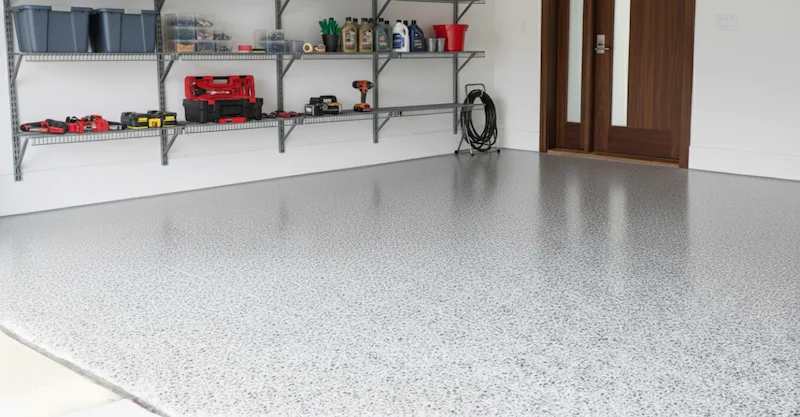
Garage Floors
The garage is the most popular application for polyaspartic coating. It handles tire marks, hot tire pickup, oil drips, and road salt far better than bare concrete or standard epoxy. Homeowners also appreciate the aesthetic upgrade—a glossy, flake-finished garage floor dramatically improves the appearance of the space and can even boost home resale value.
Basements
Finished basements benefit from polyaspartic flooring because it creates a durable, easy-to-clean surface that resists the occasional moisture exposure basements can experience. It’s a popular choice for home gyms, playrooms, and workshop areas where the floor needs to be tough but also visually appealing.
Commercial and Industrial Spaces
Warehouses, auto shops, retail showrooms, food processing facilities, and medical offices all make use of polyaspartic coatings. The fast return-to-service time is especially valuable in commercial settings where floor closure means lost productivity. The chemical resistance and ease of sanitation also make it a preferred choice in environments with strict cleanliness requirements.
Cost of Polyaspartic Floor Coating
Polyaspartic coating costs more than standard epoxy. The final price depends on several factors. These include the space size and concrete condition. It also depends on the number of coats. Decorative options, like flakes or metallic pigments, can raise the cost.
Geographic location also plays a role, as labor rates vary by market. While the upfront investment is higher, the extended lifespan often makes it the more economical choice over time.
Is Polyaspartic Floor Coating Worth It?
For most homeowners and facility managers, polyaspartic coating is worth the investment. However, it depends on your priorities and circumstances.
It’s the best choice when you need a fast turnaround, plan to keep the space for years, or want a coating that lasts. It holds up to heavy use, UV exposure, and chemical spills.
Whether you're coating a garage where you work on vehicles, a basement gym with daily foot traffic, or a commercial space that can't afford downtime — polyaspartic is hard to beat.
If budget is the main concern or the space sees light use, a quality epoxy system may be all you need. Just note that significant moisture issues in the slab should be resolved before applying any coating, regardless of type.
The key to getting the most out of polyaspartic flooring is professional installation. Given the short working time and the critical importance of proper surface prep, this is not a project where cutting corners pays off.
Ready to upgrade your garage floor? Get a free quote from Danley's — Chicagoland's specialists in polyaspartic garage floor coatings.
Get started with a FREE QUOTE
Complete the form below and a Danley’s representative will be in touch.
*View our privacy policy
Illinois Roofing License Number: 104-017677 | City of Chicago General Contractor License Number: TGC093963